
System Integration
Bringing Technology Together
A successful test system depends on how its individual elements work together. Magnetron Systems integrates instrumentation, RF hardware, antennas, switching, control systems, software and supporting infrastructure into cohesive test and measurement environments.
Our role is to connect the individual technologies into a system that operates as intended — reliably, efficiently and consistently.
Different technologies. One integrated system.
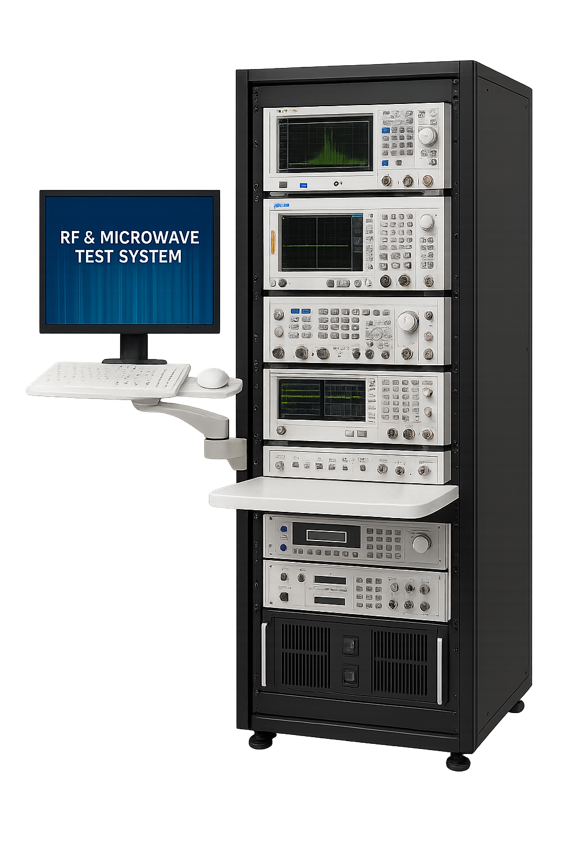
1. More Than Equipment Installation
System integration goes beyond connecting instruments and cables.
We consider the complete interaction between the hardware, RF paths, control interfaces, software and operating procedures.
Depending on the application, this can include:
- RF signal paths
- RF power chains
- Measurement instrumentation
- Antennas and positioning equipment
- RF switching and routing
- Control hardware
- Instrument interfaces
- Automation software
- Data acquisition
- Test sequencing
- Reporting
- User interfaces
The goal is to make the complete system function as one coordinated test environment.
2. Integrating Complex Test Systems
Magnetron can integrate technologies from multiple manufacturers where the application requires a combination of specialised equipment.
This is particularly valuable when a complete solution involves different technology domains.
3. RF Test Systems
Integration of signal sources, amplifiers, switches, couplers, loads, measurement equipment and control systems into a coordinated RF test environment.
4. EMC Test Systems
Integration of test receivers, RF sources, amplifiers, antennas, coupling networks, monitoring equipment and control software.
5. Antenna Measurement Systems
Integration of positioners, antennas, VNAs or receivers, RF switching, measurement software and control systems.
6. Automated Test Systems
Integration of multiple instruments and devices into automated measurement sequences with controlled test execution and data collection.
7. Hardware Integration
The physical RF and electrical connections between system elements can have a direct effect on system performance.
Integration activities may include:
- RF cabling
- Signal routing
- RF switching
- Power distribution
- Control interfaces
- Equipment interconnections
- Connector and interface compatibility
- Rack and equipment configuration
- System wiring
The objective is to create a clean, maintainable and clearly defined system architecture.
8. Software & Control Integration
Modern test systems increasingly depend on software to coordinate multiple instruments and automate measurements.
Magnetron can integrate:
Instrument Control
Communication with connected measurement equipment and RF hardware.
Test Sequencing
Automated execution of defined measurement procedures.
Data Acquisition
Collection and organisation of measurement results.
System Control
Coordination of equipment, switching, positioning and test states.
Reporting
Generation and management of measurement results and test documentation.
Where required, software integration can be developed around the customer’s existing test methodology and operating requirements.
9. Multi-Manufacturer Integration
Customers often need to combine technologies from different manufacturers to achieve the required system performance.
Magnetron’s integration role is to ensure that these elements work together within the intended application.
We consider:
- Interface compatibility
- RF performance
- Control protocols
- Timing requirements
- Measurement synchronisation
- Software interfaces
- Operational workflow
- Future expandability
This allows customers to select technologies based on application requirements rather than being restricted to a single equipment ecosystem.
10. System Bring-Up
Once the system has been physically assembled, the individual elements must operate together correctly.
System bring-up can include:
Connectivity Checks
Verification of physical and communication interfaces.
Functional Checks
Confirmation that each subsystem performs its intended function.
Signal-Path Verification
Checking RF and measurement paths throughout the system.
Control Verification
Ensuring that instruments, switches, positioners and other devices respond correctly.
Software Verification
Checking automated sequences, data acquisition and system control.
System Optimisation
Resolving integration issues and refining the system for practical operation.
11. From Integration to Operation
System integration is closely connected to the final stages of project delivery.
Depending on the project, Magnetron can support:
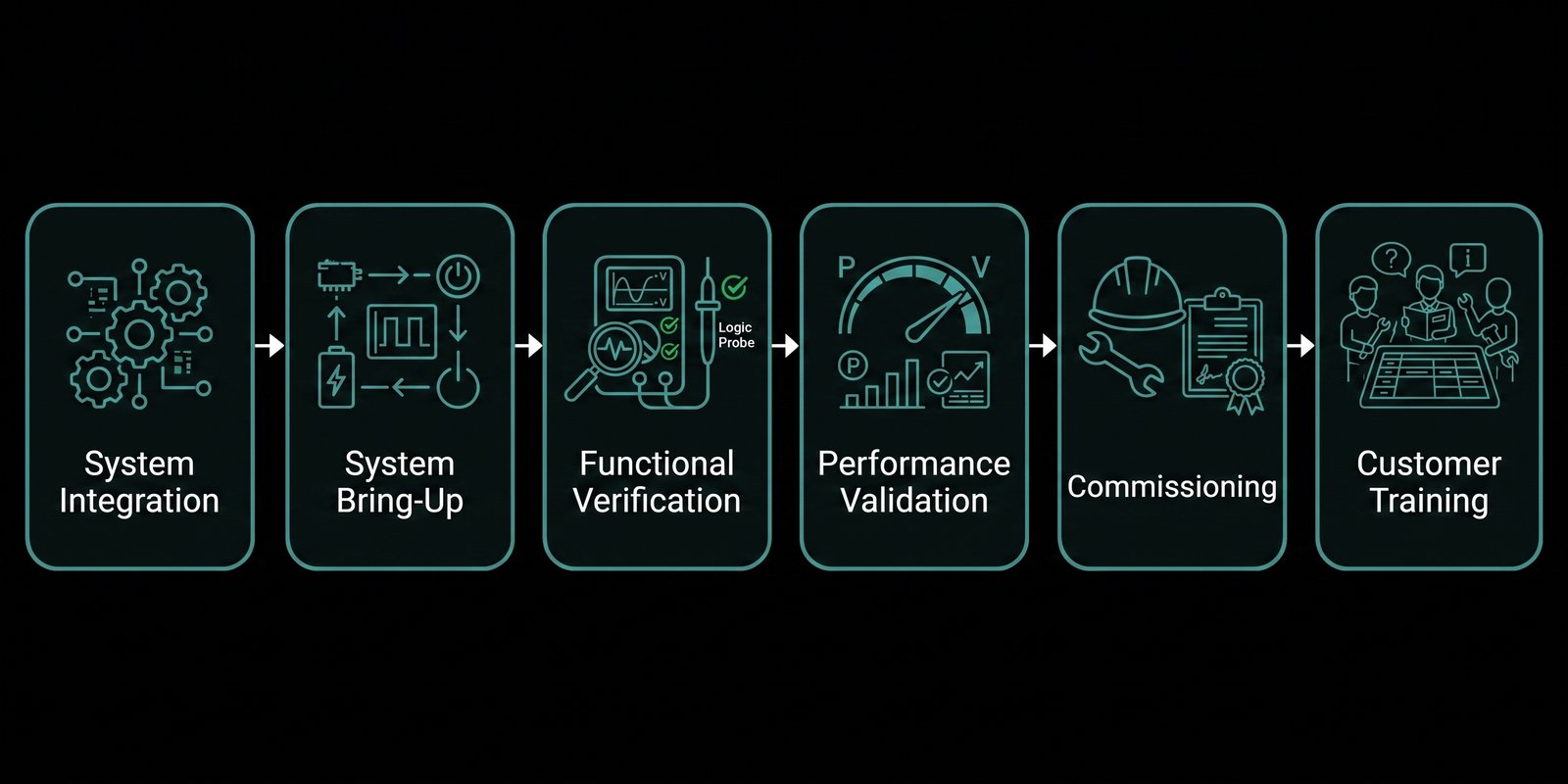
This creates a controlled transition from an assembled system to an operational test capability.
12. One System. One Point of Responsibility.
When a system contains equipment from multiple manufacturers, determining responsibility for integration can become challenging.
Magnetron provides a central engineering interface for the complete system — helping coordinate the interaction between the different technologies and ensuring that the delivered solution is treated as a complete system rather than a collection of individual components.