
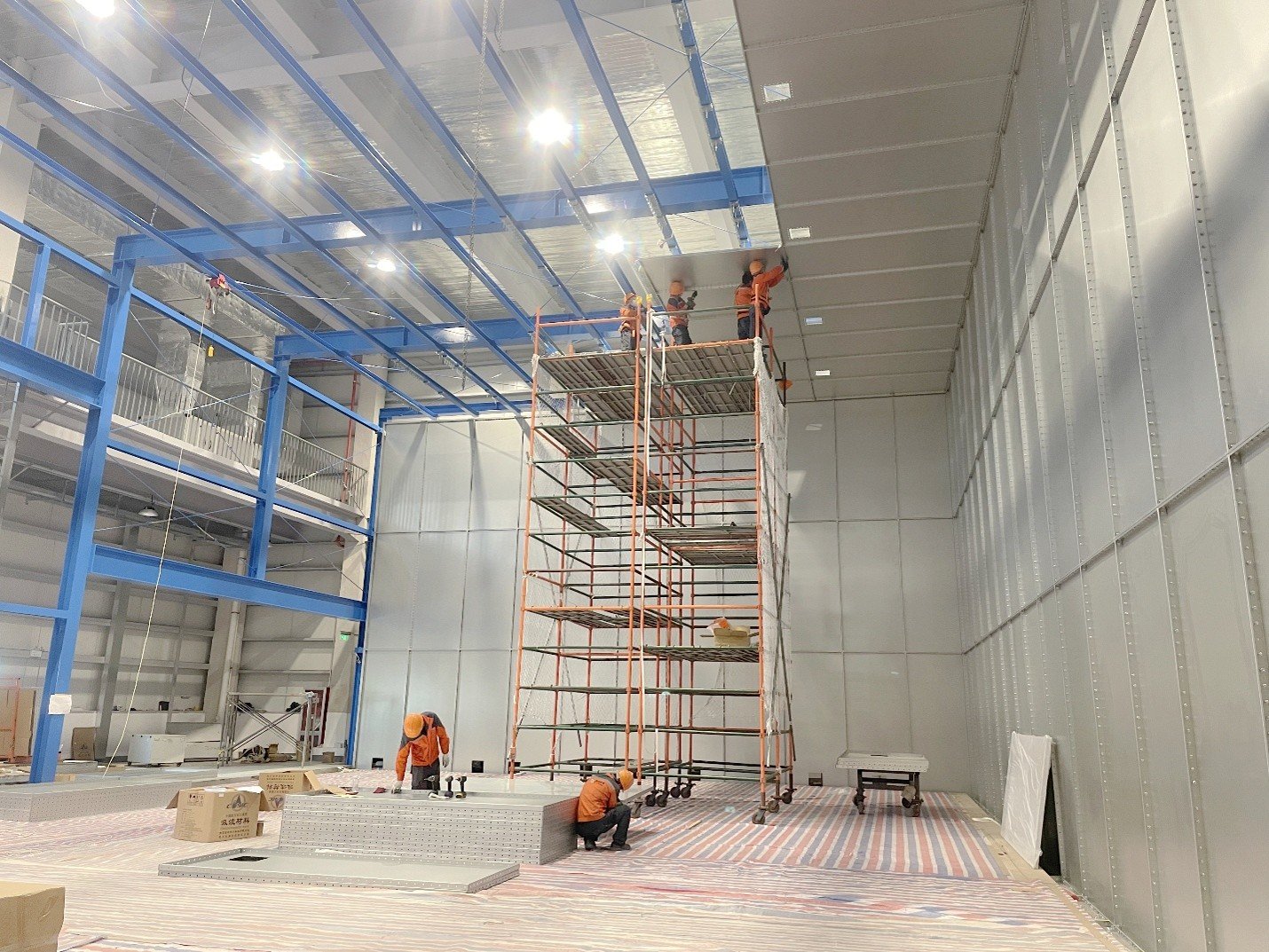
Facility Design
Engineering the Environment Behind the Test
A high-performance test system depends on more than instrumentation. The physical environment, RF infrastructure, shielding, power, grounding, access and supporting services all influence the quality and reliability of measurements. Magnetron Systems provides facility design expertise for RF, EMC, antenna measurement and specialised test environments — helping customers create facilities that are technically appropriate, practical to operate and ready for future requirements.
From laboratory concept to a functional test environment.
1. Designed Around the Test Environment
Every facility has its own requirements. The required test standards, frequency range, equipment, DUT dimensions, power levels, measurement method and available space all influence the facility configuration.
We consider these requirements together to develop an environment in which the intended test system can operate effectively.
2. Our facility design capabilities include:
EMC Test Facilities
Planning and design of environments for radiated and conducted emissions and immunity testing, including the supporting RF infrastructure required for compliance measurements.
RF & Microwave Laboratories
Design of controlled environments for RF generation, amplification, measurement, characterisation and research applications.
Antenna Measurement Facilities
Planning of measurement environments incorporating antenna positioning, RF paths, instrumentation, absorber arrangements and associated infrastructure.
Shielded & Anechoic Environments
Design considerations for shielded rooms, semi-anechoic environments, fully anechoic environments and other controlled RF spaces.
Specialised Test Facilities
Facility concepts for application-specific testing where conventional laboratory configurations do not meet the requirements.
3. From Room to Working Test Environment
A test facility is an ecosystem of interconnected elements.
Our facility design approach considers the interaction between:
Test Environment
The physical space and measurement conditions.
RF Infrastructure
Cabling, signal routing, penetration systems and RF distribution.
Shielding & Absorption
Control of unwanted electromagnetic energy and reflections.
Power & Grounding
Electrical infrastructure appropriate to the equipment and test environment.
Equipment Areas
DUT locations, instrumentation areas, control rooms and operator access.
Supporting Infrastructure
Services required to operate, maintain and expand the facility.
The result is a facility designed around the intended testing activity rather than simply a room filled with equipment.
4. Space Planning & Functional Layout
Effective facility design starts with how the laboratory will actually be used.
We consider:
- DUT size and handling
- Equipment placement
- Operator access
- Test configuration changes
- Cable routing
- Equipment maintenance
- Control room requirements
- Safety and access
- Future expansion
- Serviceability
The objective is to create a facility that is not only technically capable, but also practical for day-to-day operation.
5. RF Environment & Infrastructure
For RF and EMC applications, the surrounding environment can directly influence measurement results.
Facility design may therefore address:
- RF shielding
- Absorber arrangements
- RF doors
- Filters
- Penetration panels
- RF cabling
- Signal distribution
- Grounding
- Power distribution
- Monitoring and control infrastructure
These elements are considered as part of the facility rather than as isolated components.
6. Designed for Compliance
Where a facility is intended for formal testing, its design must support the applicable standards and measurement methodology.
Magnetron can incorporate the requirements of relevant standards into the facility concept, including applicable:
- CISPR standards
- IEC standards
- IEEE standards
- MIL-STD requirements
- ETSI requirements
- Automotive EMC standards
The specific standards and facility characteristics are defined according to the intended testing scope.
7. Facility Development
A facility project can begin at different stages.
Magnetron can support customers with:
New Facility
Developing a test environment from the ground up.
Facility Expansion
Adding new capabilities to an existing laboratory.
Facility Upgrade
Improving an existing environment to meet new requirements.
Capability Expansion
Extending frequency, power, test standards or measurement capabilities.
Facility Modernisation
Updating infrastructure, instrumentation interfaces and operating capabilities.
8. From Facility Design to Operational Laboratory
Facility design forms one part of the wider project lifecycle.
Where required, Magnetron can continue from:
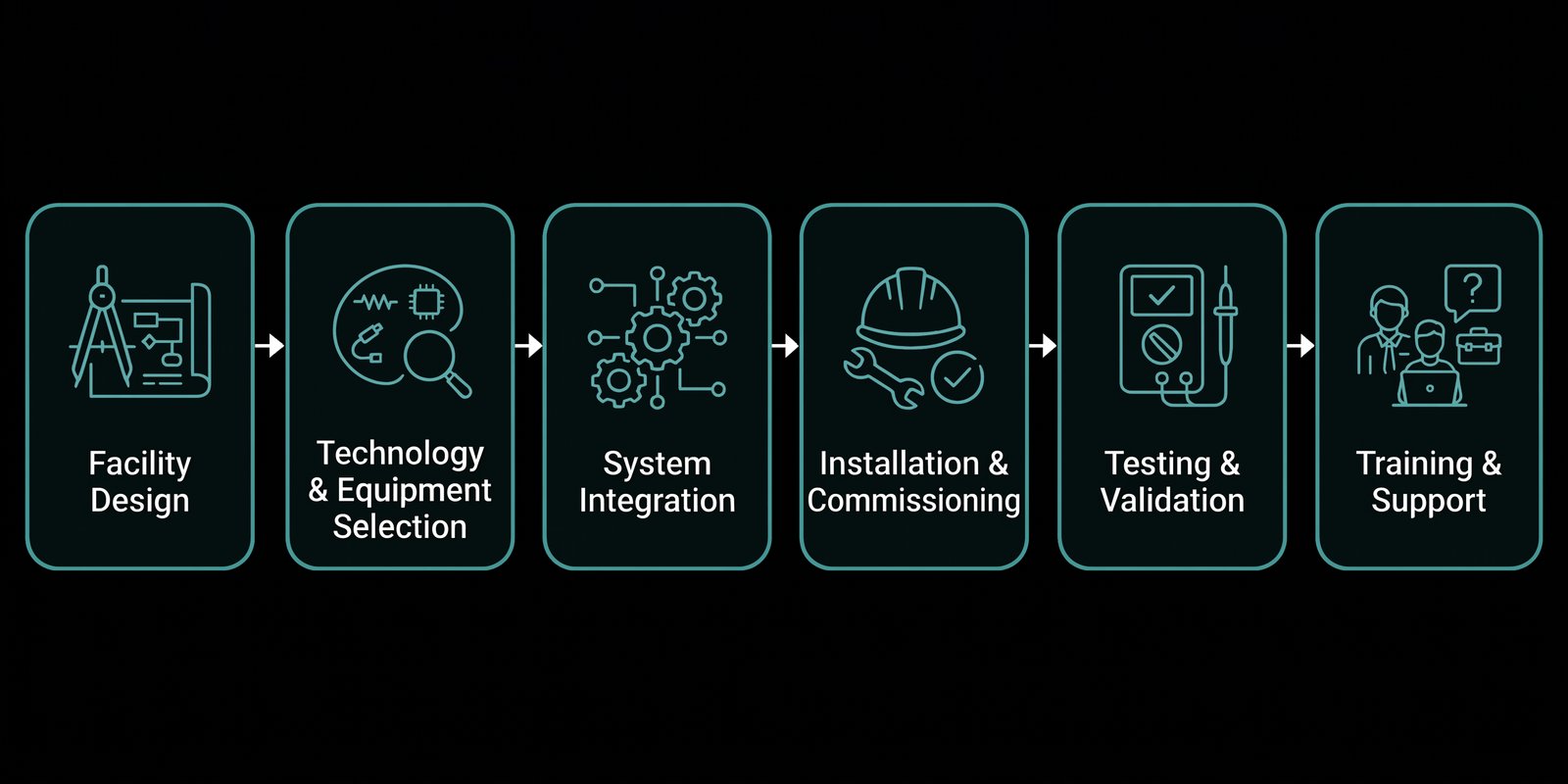
This provides continuity between the physical facility and the test systems that operate within it.
9. Build the Right Environment for Your Testing
Whether you are planning a new EMC laboratory, an RF research facility, an antenna measurement environment or a specialised test facility, Magnetron Systems can help define the technical and infrastructure requirements needed to turn the available space into a functional testing environment.